.png)
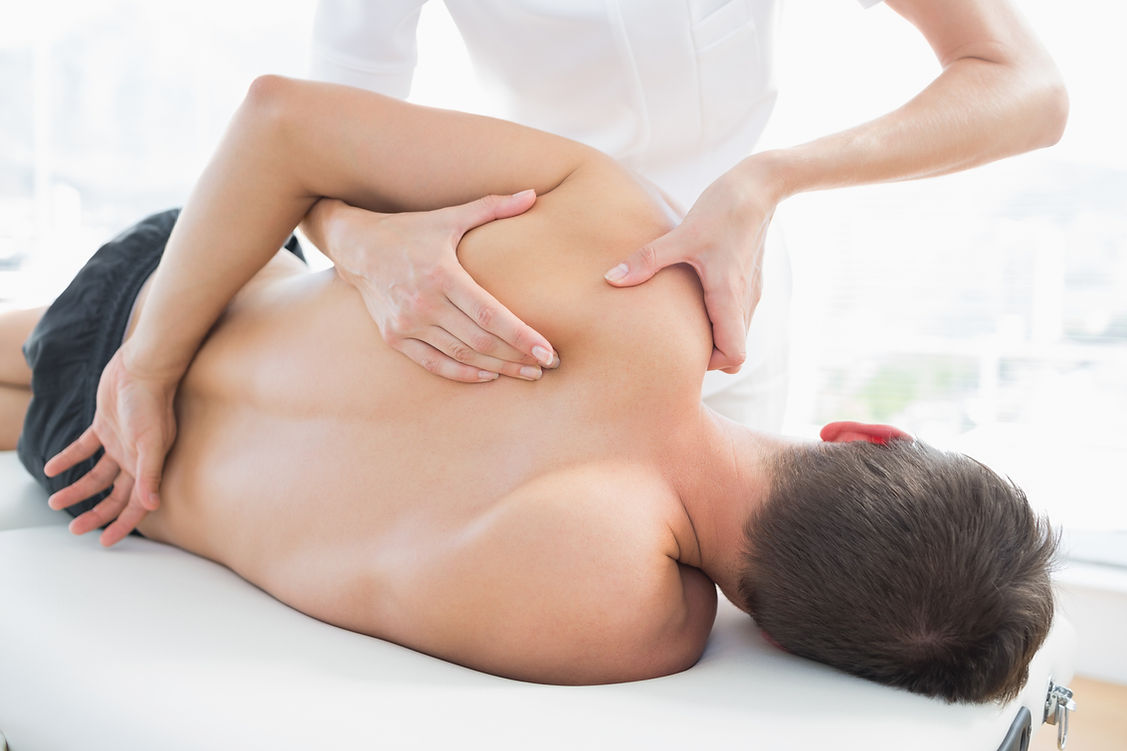
🤔 What Is Frozen Shoulder?
Frozen Shoulder is a condition where the connective tissue (capsule) in your shoulder joint thickens and tightens, limiting movement. It can last 6–12+ months, progressing through three distinct phases:
-
Freezing Phase – Pain increases, motion decreases.
-
Frozen Phase – Pain may plateau, but stiffness dominates.
-
Thawing Phase – Pain fades, and mobility begins to return.
If left untreated, you may experience:
-
Difficulty lifting your arm overhead or behind your back
-
Struggling to get dressed, reach shelves, drive, or sleep on your side
-
Compensation injuries in your neck, opposite shoulder, or even hips
-
Muscle atrophy and long-term loss of function
Why Does Frozen Shoulder Happen?
💉
Post-surgery recovery (rotator cuff, mastectomy, cardiac)
🏋️
Repetitive overhead motion sports : Tennis, Swimming, CrossFit, Baseball, Volleyball
🛌
Prolonged immobility or sleeping on one side too long
🧬
Medical conditions like Diabetes, Hypothyroidism, and Autoimmune Disorders
😞
Chronic stress that causes muscle guarding and fascia restriction
🦠
Long illness or post-COVID inflammation
💼
Occupational stress (desk work, hairstylists, caregivers,Dentists, Nurses, Mechanics, Bodyworkers)
🧘
Hormonal shifts during menopause or perimenopause
Frozen Shoulder (Adhesive Capsulitis) can happen after injury, surgery, or even without a clear cause. I’ve helped clients from Temecula, San Juan Capistrano, Lake Elsinore, and surrounding areas heal from frozen shoulder often triggered by:
Where Is My Pain Coming From?
Pain can radiate across the entire shoulder complex and into the arm, neck, or back. Often, the true source is muscular trigger points and fascial restrictions, not the joint itself. These patterns often mimic nerve pain, but are treatable with manual soft tissue therapy.
🔍 Muscles that cause Frozen Shoulder pain & where they refer it:

Subscapularis
Deep ache in back of shoulder, inner arm
Deep Front Line

Deltoid
Lateral upper arm
Functional Line

Supraspinatus
Top of shoulder, down the arm
Deep Front Line

Latissimus
Inner arm, lower shoulder blade
Spiral Line, Posterior Oblique Sling

Infraspinatus
Front shoulder, lateral arm, hand
Spiral Line

Pec Major
Front of shoulder, down bicep
Superficial Front Line, Anterior Oblique Sling

Teres Major
Back of shoulder, under armpit
Posterior Oblique Sling

Trapezius
Neck, shoulder blade, top of shoulder
Superficial Back Line, Spiral Line
❓ Where Else Can It Be Coming From?
Frozen Shoulder isn’t just a shoulder problem—it’s often part of a whole-body compensation pattern:
-
❗️Right shoulder pain may be triggered by a left hip restriction (Posterior Oblique Sling)
-
❗️Shoulder + same-side knee pain means fascial overload
-
❗️Neck tension (traps, scalenes) can shut down shoulder movement
-
❗️Foot pronation or pelvic tilt can pull fascia tight across the entire upper body
✅ That’s why I always assess beyond your shoulder—and treat the true cause, not just the symptom.
When Will I Feel Better? How We Treat Frozen Shoulder: A 3-Phase Protocol

Frozen Shoulder usually resolves in 3 phases over 6–12+ months. The right bodywork at each stage accelerates healing. Working with me ensures you’re not just waiting it out—you’re taking action to heal faster, safer, and with less pain.
We don’t chase symptoms. We treat the root cause using John Barnes Myofascial Release, Dr. Janet Travell’s Trigger Point Therapy, Vodder Lymphatic Drainage, and Fascial Stretch Therapy—combined with nervous system regulation.
Why Choose Elite Bodywork?
Your Personalized Reset Includes:
-
Shoulder Reset → Release 19 mobility + stability muscles
-
Arm Relief → Ease 15 movement & nerve-related muscles
-
Back Reset → Restore 18 spine, posture & core muscles
-
Chest Open → Release 10 breathing & anterior chain muscles

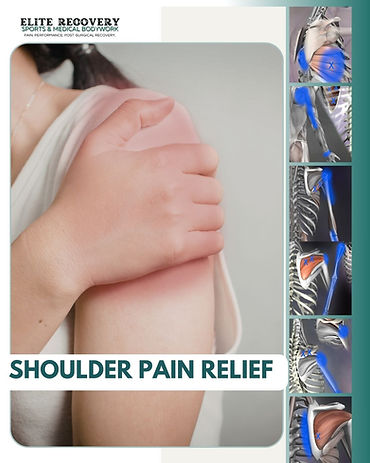
Signature Recovery Approach
Every session is built around how your body is functioning that day.
Not just your shoulder—
but the full pattern behind it.
You may receive:
-
Trigger point + neuromuscular therapy (shoulder + surrounding tissue)
-
Myofascial release (chest, back, arm lines)
-
Fascial stretch therapy (restore range safely)
-
RAPID Neurofascial Reset (reduce guarding)
-
Lymphatic drainage (reduce inflammation + swelling)
• Breath + rib work (restore upper body mechanics)
This is not one technique.
It’s a system.
Targeted Head, Face & Sinus Therapy for Lasting Relief
Healing Takes Consistency, Not Quick Fixes
Struggling with shoulder pain, stiffness, or limited range of motion?
Stop working around it and start addressing the pattern with a structured plan designed to restore movement and function.
Why Choose This 3-Pack?
-
Address the Pattern, Not Just the Pain
No more temporary relief—this plan focuses on the deeper drivers of restriction. -
Restore Shoulder Movement
Improve reaching overhead, behind your back, and across your body. -
Reduce Compensation & Tension
Take pressure off the neck and upper back from overworking. -
Support Post-Surgical & Hormonal Changes
Designed for post-mastectomy, perimenopause, and menopause-related stiffness. -
Build Lasting Mobility
Three structured sessions allow your body to adapt, relearn, and maintain movement.
💰 Membership Price: $630 Saves you $45
⏳ Limited spots—secure your relief today!

SELF-CARE & VIDEO TUTORIALS
Relief goes beyond the table—explore our Pain Relief Blog for tips and tools
❓: What does a session look like?
❓ Why Do I Need So Many Sessions for Frozen Shoulder?
Great question—and an important one!
Frozen Shoulder (Adhesive Capsulitis) is a complex condition that affects not only your joint, but your fascia, muscle function, nervous system, and even hormonal balance. Healing it takes time, strategy, and the right sequence of care. Here’s why multiple sessions are not just recommended—they’re essential:
F.A.Q.
🏆 Sports Most Impacted by Shoulder, Arm, Chest & Back Pain
Pain doesn’t just stop at the neck—it disrupts your performance, focus, and recovery.
Football Athletes
Impact and overhead throws lead to rotator cuff strain, chest tension, and nerve compression.
Volleyball Players
Frequent hitting and blocking tightens pecs, shoulders, and upper back fascia.
Jiu-Jitsu, MMA & Wrestling
Blocking and grappling stress the neck-shoulder junction and upper thoracic region.
Swimmers
Repetitive strokes create imbalances and thoracic outlet risk.


REFERRAL NETWORK
Your care doesn’t stop here—we collaborate.
Your shoulder pain isn’t isolated—neither is your care. At Elite Recovery, we believe in team-based healing. That’s why we work with a trusted network of professionals to ensure you get full-circle support for conditions like frozen shoulder, thoracic outlet syndrome, and chronic upper back tension.
Collaborate with Elite Recovery
Support your patients with expert soft tissue therapy.
Who We Work With:
✔ Orthopedic Surgeons & Sports Medicine Docs – For patients recovering from rotator cuff injuries, labral tears, or shoulder impingement.
✔ Chiropractors – To maintain spinal and shoulder alignment while we release soft tissue restrictions.
✔ Physical Therapists – We enhance rehab programs by restoring mobility, reducing fascial tightness, and preparing tissue for strength work.
✔ Pain Management Specialists – As a drug-free alternative or complement to injections and ongoing care.
✔ Personal Trainers & Coaches – To optimize athletic performance and reduce injury risk.
✔ Injury Attorneys – We provide targeted therapy for clients with work or auto-related shoulder, arm, and neck trauma.
WHERE DOES IT HURT?
You may feel it in your shoulder or arm—but the root cause could be a stuck fascia, compressed nerve, or overactive trigger point. We specialize in finding exactly where your body is holding tension—and releasing it .
⚡ Common Upper Body Pain Patterns We Treat
-
Frozen Shoulder → Painful lifting & limited range of motion that stalls daily life & training.
-
Front Shoulder Pain → Posture strain, overuse, or pec tightness pulling the shoulder forward.
-
Back Shoulder Pain → Often tied to rotator cuff or scapular imbalance, limiting strength & reach.
-
Arm Pain & Biceps Tendinitis → Inflammation, nerve compression, or overload from lifting & throwing.
-
Chest Pain → Fascial restrictions in pec minor & intercostals that restrict breathing & posture.
-
Upper Back Pain → Tension between the shoulder blades, common with desk work & heavy training.
-
Mid-Back Stiffness → Thoracic immobility & fascia adhesions that affect rotation & performance.
-
Thoracic Outlet Syndrome → Numbness, tingling, or aching down the arm from nerve compression.


The 33 Muscles Behind Your Pain
🎯 Soft Tissue Therapy Targets These Muscles in a Specific Sequence for Lasting Relief.
-
Abdominal Obliques – Refer pain across the lower abdomen and into the groin, often mimicking menstrual or digestive discomfort.
-
Biceps Brachii – Refers pain to the front of the shoulder and down the front of the arm to the elbow.
-
Brachialis – Sends pain to the base of the thumb and elbow crease, often mistaken for joint pain.
-
Coracobrachialis – Refers pain to the front of the shoulder and down the back of the upper arm.
-
Deltoid – Refers pain over the shoulder cap and sometimes down the upper arm.
-
Gluteus Medius – Sends pain into the outer hip and down the lateral thigh to the knee.
-
Iliocostalis Lumborum – Refers pain to the lower back and sacrum, sometimes wrapping around the side of the torso.
-
Iliocostalis Thoracis – Refers pain to the mid-back and along the ribcage.
-
Iliopsoas – Sends deep, aching pain in the low back, groin, and front of the thigh.
-
Infraspinatus – Refers pain deep into the front of the shoulder and down the arm into the hand.
-
Intercostals – Send sharp, localized pain between the ribs and may mimic heart or organ pain.
-
Latissimus Dorsi – Refers pain to the lower scapula, mid-back, and occasionally down the inner arm to the hand.
-
Levator Scapulae – Sends pain along the neck, shoulder blade border, and base of the skull.
-
Longissimus Thoracis – Refers pain to the spine and lower back, often mimicking disc pain.
-
Multifidi – Sends deep, aching pain along the spine and into the sacrum.
-
Pectoralis Major – Refers pain across the chest and down the inside of the arm to the hand.
-
Pectoralis Minimus – Sends pain to the front of the shoulder and may mimic chest pain.
-
Rectus Abdominis – Refers pain in a band across the mid-abdomen and low back.
-
Rhomboid – Refers pain between the shoulder blades and along the spine.
-
Scalene – Sends pain to the chest, shoulder, and down the arm, often with numbness or tingling.
-
Serratus Anterior – Refers pain around the ribcage and side body, sometimes wrapping toward the back.
-
Serratus Posterior Inferior – Sends pain to the lower ribs and lumbar area.
-
Serratus Posterior Superior – Refers pain to the upper back, often between the shoulder blades.
-
Splenius Cervicis – Sends pain to the back of the neck and base of the skull, sometimes into the eye.
-
Sternalis – Refers localized pain to the sternum, mimicking chest or breast pain.
-
Sternocleidomastoid – Refers pain to the forehead, around the eye, jaw, and occasionally causes dizziness.
-
Subclavius – Sends pain to the front of the shoulder, arm, and occasionally the hand.
-
Subscapularis – Refers pain to the back of the shoulder and down the back of the arm to the wrist.
-
Supraspinatus – Sends pain over the shoulder cap and down the lateral arm.
-
Teres Major – Refers pain to the back of the shoulder and along the posterior arm.
-
Teres Minor – Sends pain to the back of the shoulder and sometimes to the lateral arm.
-
Trapezius – Refers pain to the neck, upper shoulder, temple, and jaw.
-
Triceps Brachii – Sends pain down the back of the arm and forearm, sometimes to the ring and pinky fingers.
-
Infraspinatus
-
Deltoid
-
Scalene
-
Supraspinatus
-
Pectoralis Major
-
Pectoralis Minimus
-
Biceps Brachii
-
Coracobrachialis
-
Sternalis
-
Subclavius
-
Latissimus Dorsi
Back of Shoulder Pain
-
Deltoid
-
Levator Scapulae
-
Supraspinatus
-
Teres Major
-
Teres Minor
-
Subscapularis
-
Serratus Posterior Superior
-
Latissimus Dorsi
-
Triceps Brachii
-
Trapezius
-
Iliocostalis Thoracis
-
Scalene
-
Biceps Brachii
-
Triceps Brachii
-
Subclavius
-
Infraspinatus
-
Brachialis
-
Supraspinatus
-
Deltoid
-
Sternalis
-
Scalene
-
Teres Major
-
Triceps Brachii
-
Deltoid
-
Subscapularis
-
Supraspinatus
-
Teres Minor
-
Latissimus Dorsi
-
Serratus Posterior Superior
-
Coracobrachialis
-
Scalene
-
Levator Scapulae
-
Trapezius
-
Multifidi
-
Supraspinatus
-
Rhomboid
-
Splenius Cervicis
-
Triceps Brachii
-
Biceps Brachii
Thoracic Back Pain
-
Iliocostalis Thoracis
-
Multifidi
-
Serratus Posterior Inferior
-
Rectus Abdominis
-
Intercostals
-
Latissimus Dorsi
-
Iliopsoas
-
Rectus Abdominis
-
Scalene
-
Latissimus Dorsi
-
Iliocostalis Thoracis
-
Multifidi
-
Rhomboid
-
Serratus Posterior Superior
-
Infraspinatus
-
Trapezius
-
Serratus Anterior
-
Levator Scapulae
-
Longissimus Thoracis
-
Multifidi
-
Rectus Abdominis
-
Iliopsoas
-
Iliocostalis Lumborum
-
Iliocostalis Thoracis
-
Gluteus Medius
-
Pectoralis Major
-
Pectoralis Minimus
-
Scalene
-
Sternocleidomastoid
-
Sternalis
-
Intercostals
-
Subclavius
-
Abdominal Oblique
-
Serratus Anterior
-
Intercostals
-
Latissimus Dorsi